Michael Mosley's 8 Week Blood Sugar Diet
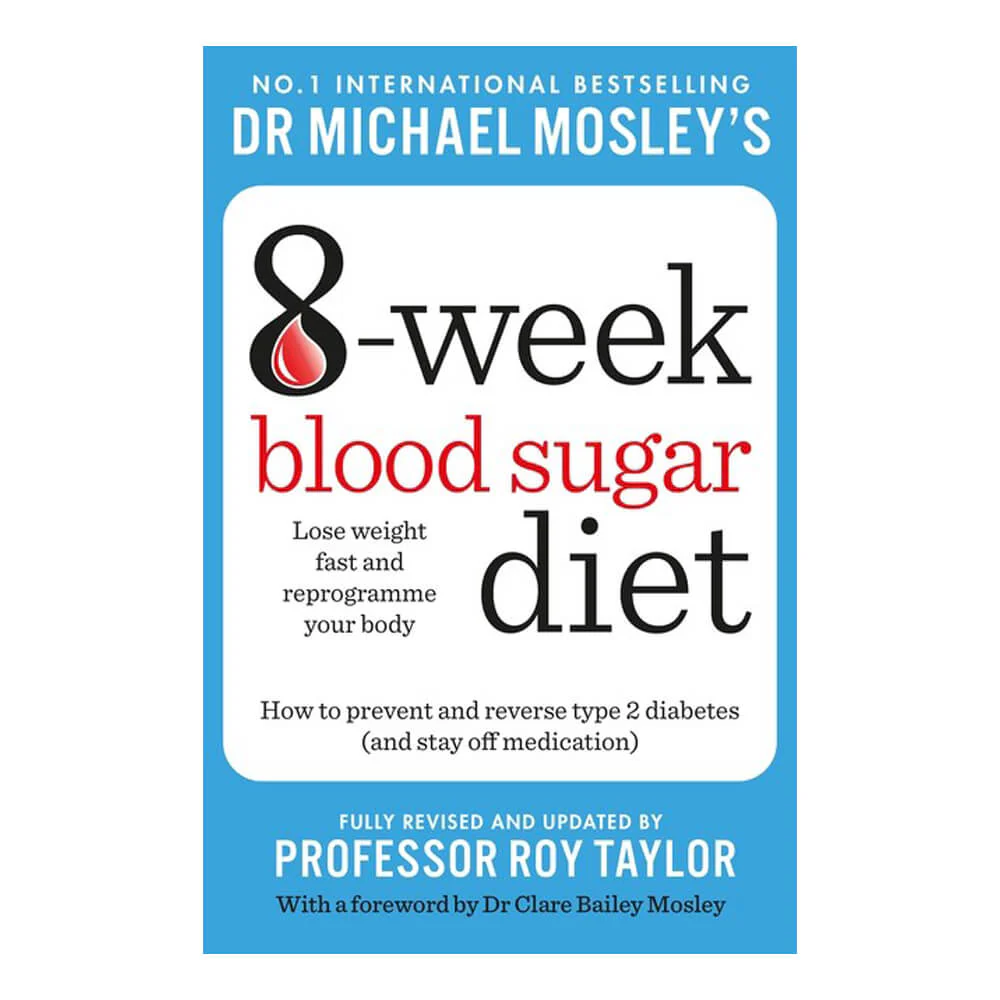
Michael Mosley's 8 Week Blood Sugar Diet: How to Prevent and Reverse Type 2 Diabetes and Stay Off Medication, by Dr Michael Mosley.
Michael Mosley’s 8 Week Blood Sugar Diet provides a structured, evidence‑based approach to improving blood glucose levels and supporting the reversal of type 2 diabetes. Dr Mosley explains the science behind excess abdominal fat, why it affects health, and how targeted dietary changes can help reduce it.
The programme is built around three key elements: a low‑carbohydrate eating plan, guidance on physical activity, and practical mental wellbeing strategies. Together with menu plans, these components create a clear framework to help manage blood sugar, support weight loss, and reduce the risk of type 2 diabetes.
This revised edition, updated by Professor Roy Taylor, includes the latest research on type 2 diabetes, liver and pancreatic fat, waist‑to‑hip ratio guidance, and enhanced nutritional information for recipes. It offers clear, accessible advice for anyone looking to take control of their metabolic health.
Diabetes UK does not own the content of this book. However, our Clinical team have advised that it is likely to be helpful for many people. Everyone is different and some of the information may not apply to some people so check with your healthcare team if you are not sure.
Product Information
Product Information
Shipping & Returns
Shipping & Returns
Michael Mosley's 8 Week Blood Sugar Diet
Michael Mosley's 8 Week Blood Sugar Diet
Michael Mosley's 8 Week Blood Sugar Diet: How to Prevent and Reverse Type 2 Diabetes and Stay Off Medication, by Dr Michael Mosley.
Michael Mosley’s 8 Week Blood Sugar Diet provides a structured, evidence‑based approach to improving blood glucose levels and supporting the reversal of type 2 diabetes. Dr Mosley explains the science behind excess abdominal fat, why it affects health, and how targeted dietary changes can help reduce it.
The programme is built around three key elements: a low‑carbohydrate eating plan, guidance on physical activity, and practical mental wellbeing strategies. Together with menu plans, these components create a clear framework to help manage blood sugar, support weight loss, and reduce the risk of type 2 diabetes.
This revised edition, updated by Professor Roy Taylor, includes the latest research on type 2 diabetes, liver and pancreatic fat, waist‑to‑hip ratio guidance, and enhanced nutritional information for recipes. It offers clear, accessible advice for anyone looking to take control of their metabolic health.
Diabetes UK does not own the content of this book. However, our Clinical team have advised that it is likely to be helpful for many people. Everyone is different and some of the information may not apply to some people so check with your healthcare team if you are not sure.
Original: $23.09
-65%$23.09
$8.08Product Information
Product Information
Shipping & Returns
Shipping & Returns
Description
Michael Mosley's 8 Week Blood Sugar Diet: How to Prevent and Reverse Type 2 Diabetes and Stay Off Medication, by Dr Michael Mosley.
Michael Mosley’s 8 Week Blood Sugar Diet provides a structured, evidence‑based approach to improving blood glucose levels and supporting the reversal of type 2 diabetes. Dr Mosley explains the science behind excess abdominal fat, why it affects health, and how targeted dietary changes can help reduce it.
The programme is built around three key elements: a low‑carbohydrate eating plan, guidance on physical activity, and practical mental wellbeing strategies. Together with menu plans, these components create a clear framework to help manage blood sugar, support weight loss, and reduce the risk of type 2 diabetes.
This revised edition, updated by Professor Roy Taylor, includes the latest research on type 2 diabetes, liver and pancreatic fat, waist‑to‑hip ratio guidance, and enhanced nutritional information for recipes. It offers clear, accessible advice for anyone looking to take control of their metabolic health.
Diabetes UK does not own the content of this book. However, our Clinical team have advised that it is likely to be helpful for many people. Everyone is different and some of the information may not apply to some people so check with your healthcare team if you are not sure.